Pet Travel Essentials: Road Trip Checklist for Dogs & Cats
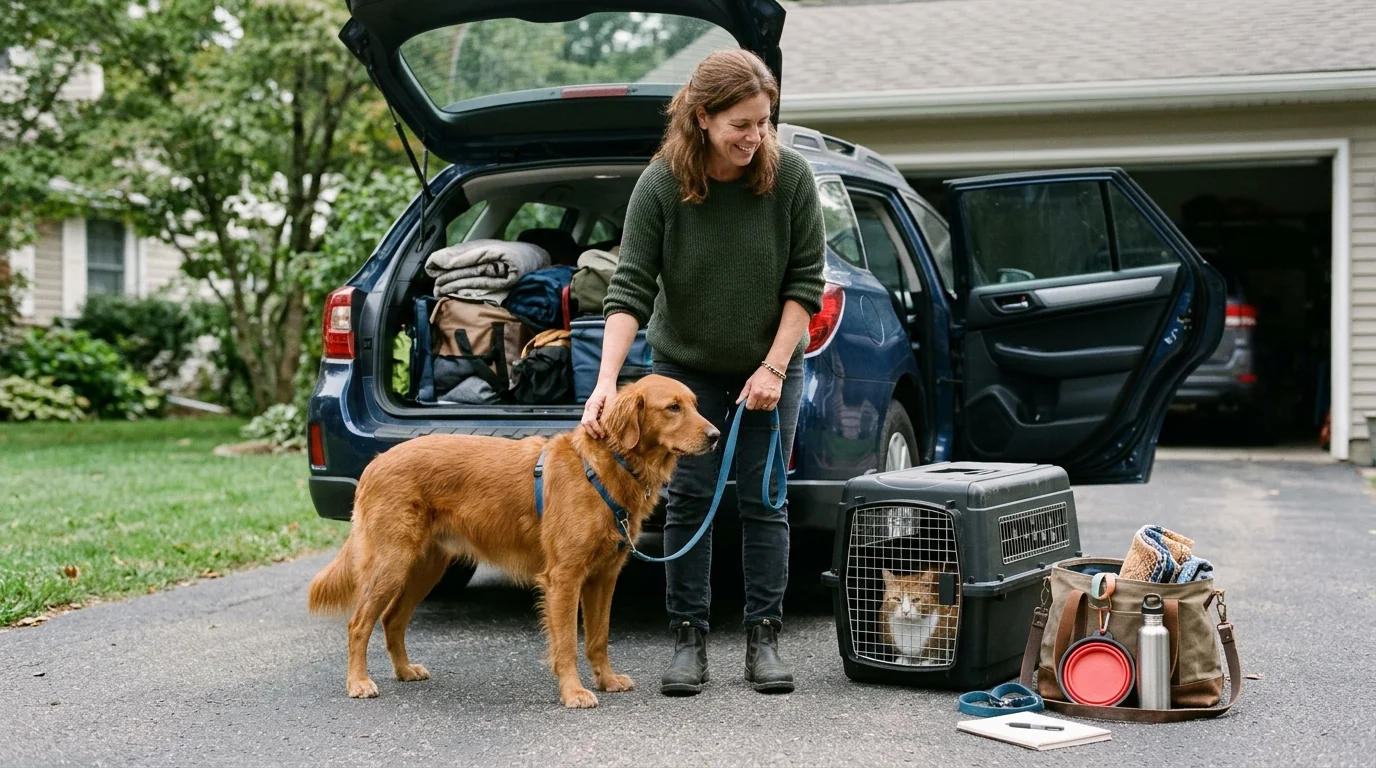
A road trip with your dog or cat can be more enjoyable when you plan for the practical details before loading the car. From water breaks to destination rules, a little preparation helps you focus on the journey rather than the items you forgot.
We like to start with a simple printable planner. Our Pet Travel Essentials Checklist gives you a place to organize your preparations, while the suggestions below can help you adapt your packing to your pet and your route.
Start Planning Before You Pack
Before booking, confirm that your accommodations accept your type of pet. Ask about fees, size restrictions, the number of pets allowed, and whether animals can be left unattended in rooms. Check the rules for the places you hope to visit, too: a pet-friendly hotel does not necessarily mean every nearby trail, attraction, or restaurant welcomes animals.
Make sure your pet’s identification is current. Check the phone number on their ID tag and update the contact information associated with their microchip, if they have one. Bring relevant vaccination or health records when your destination requires them, and keep your veterinarian’s contact information handy.
If your pet gets anxious or carsick, has a medical condition, or takes medication, discuss the trip with your veterinarian before departure. Our Pet Travel Essentials Checklist is a printable planning aid for both dogs and cats that can help you keep track of your preparations.
Build a Practical Pet Packing List
Think about what your pet needs to eat, stay comfortable, travel securely, and handle unexpected messes. Pack enough for the journey and your stay, with a little extra where practical in case you encounter delays.
The table below offers general packing suggestions; it is not a description of the printable checklist’s contents. Choose the items that make sense for your animal, destination, and length of travel.
| Category | What to consider |
|---|---|
| Food and water | Usual food, drinking water, bowls, and treats |
| Identification | Collar with current ID, leash, and relevant records |
| Comfort | Familiar bedding or a favorite toy |
| Clean-up | Waste bags, paper towels, and pet-safe cleaning supplies |
| Health | Prescribed medication and veterinarian contact information |
| Transport | A suitable carrier or pet restraint |
Keep items you may need during the drive within easy reach rather than buried under luggage. A separate bag for water, clean-up supplies, medication, and records makes roadside stops simpler. Store medication as directed by your veterinarian or its label.
Make the Drive More Comfortable
Secure your pet appropriately in the vehicle using a suitable carrier or pet restraint, and keep them out of the front seat. Position a carrier so it cannot shift during the drive, following the carrier and vehicle instructions. A secured pet is less likely to distract you while you are driving.
Plan regular stops for water and safe exercise, adjusting the timing to your pet’s needs. Before opening a vehicle door, make sure your pet is secured on a leash or inside a carrier. Choose a safe stopping place away from moving traffic, and allow time for a calm break rather than rushing back onto the road.
Never leave your pet alone in a parked vehicle, especially in warm weather. Temperatures inside a car can rise quickly, even when conditions outside seem mild. For more travel precautions, see the ASPCA’s travel safety tips.
Adjust the Plan for Dogs and Cats
Dogs may need regular leash breaks and opportunities to relieve themselves. Bring plenty of waste bags and a familiar toy or other comfort item to help maintain some of their usual routine. If your dog is not used to longer drives, shorter practice trips can help you notice what they need before the vacation begins.
For cats, choose a secure carrier and give them time to become accustomed to it before travel. Let your cat explore the carrier at home, and consider placing a familiar item inside. Bring a portable litter solution and plan how you will offer a litter break in a secure location.
Every pet responds differently to travel. A short drive may call for fewer supplies than a multi-day journey, while an older animal or one with a health condition may need a more individualized plan. The American Veterinary Medical Association’s pet travel guidance is another useful resource for preparing.
Keep Your Plans Together
Review your checklist as you pack, then look it over once more before leaving. Our printable pet travel planner is an affordable option at $3.99 for organizing a trip with your dog or cat. Keep your route details, accommodation information, and pet contacts together so you can find them when you need them.
If your route includes a national park, our Top 10 Must-See U.S. National Parks guide is another option for exploring destinations. Check each park’s current pet rules separately before making plans, since access can vary by location.
Our team encourages you to make the final plan around your individual pet: confirm destination rules, allow time for breaks, and bring the supplies that support their routine.
FAQ
What should I pack for a road trip with my pet?
Bring your pet’s usual food, water, identification, prescribed medication, a suitable carrier or restraint, cleaning supplies, and familiar comfort items. Include relevant records and your veterinarian’s contact information.
How can I prepare my cat for a car trip?
Help your cat get accustomed to a secure carrier before the trip and plan for litter needs during the journey. Consult your veterinarian about anxiety, motion sickness, or other individual concerns.
Can I use a pet travel checklist for both dogs and cats?
Yes. Our printable planner is intended for dogs and cats, and you can adapt your packing and stops to each animal’s needs.












Leave a comment